03 · Hardware · HVAC
AC Power Saver
A retrofit that captures an air conditioner's own condensate and sprays it as a fine mist onto the outdoor condenser. The evaporation cools the refrigerant, and in a standard enthalpy-difference lab test the unit's efficiency rose about 10%.
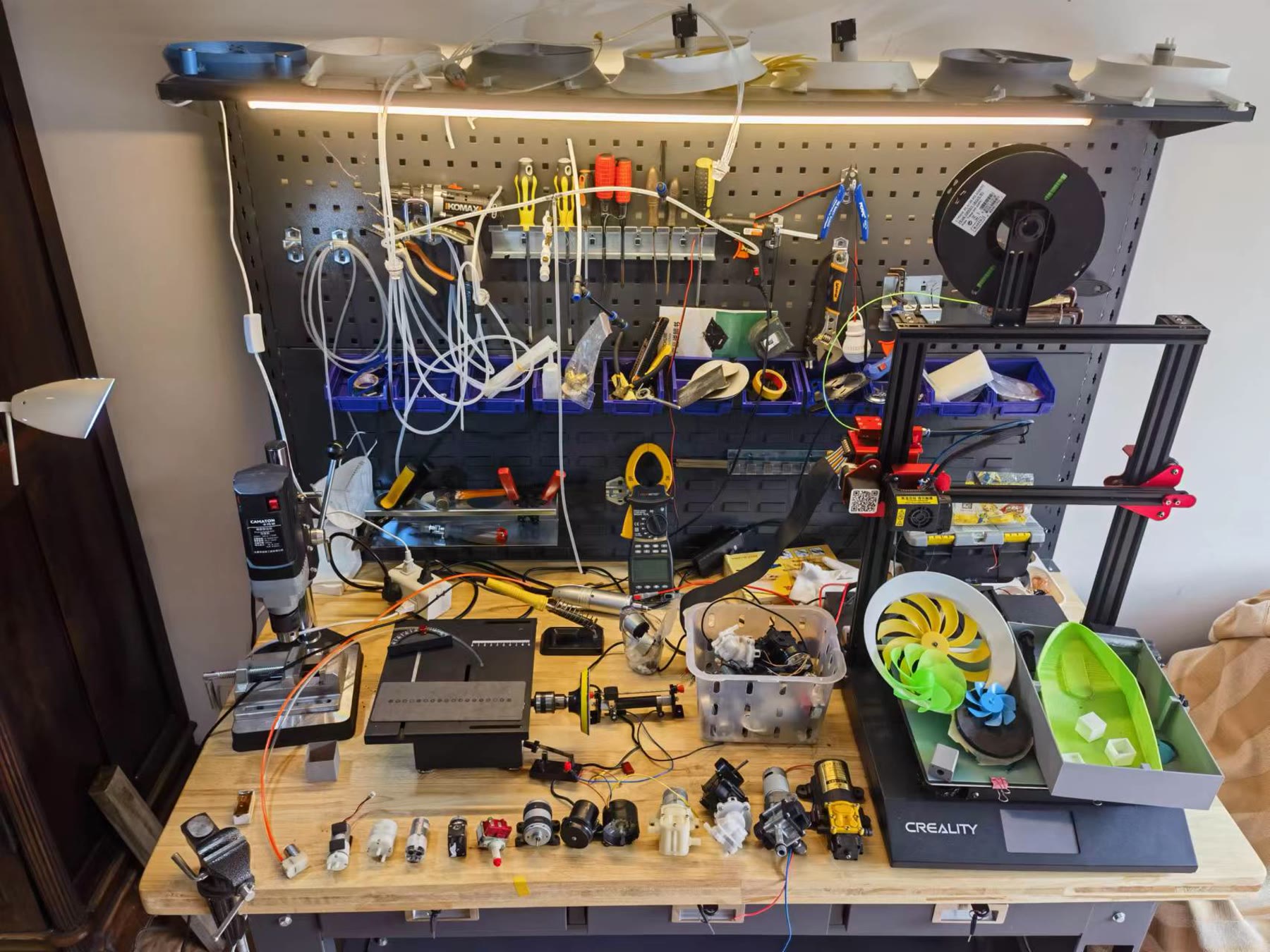
How it works
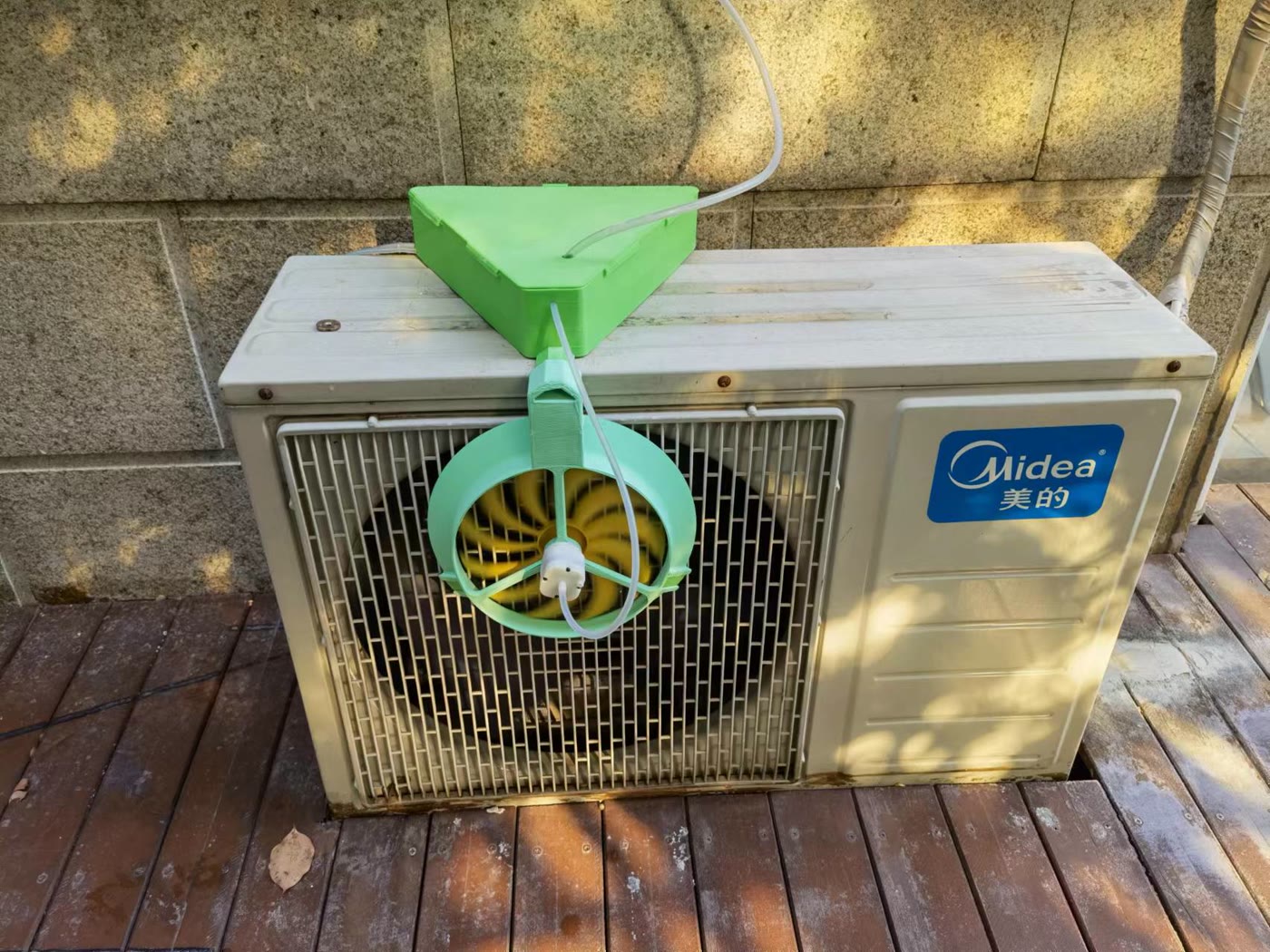
A running air conditioner continuously produces cold condensate and normally just drains it away. This device collects that water and atomizes it onto the outdoor unit's condenser. The water's latent heat of evaporation and its sensible heat pull down the temperature of the refrigerant leaving the condenser, which raises the unit's efficiency and lowers its electrical draw.
It is a retrofit, not a redesign: it mounts on an existing outdoor unit and nothing in the refrigeration cycle is replaced. There are several designs of the same idea (electric atomizing, condensate return with misting, and drip cooling from recovered condensate), and the patent family covers the mounting method, the atomizing method and those variants.
Measured result
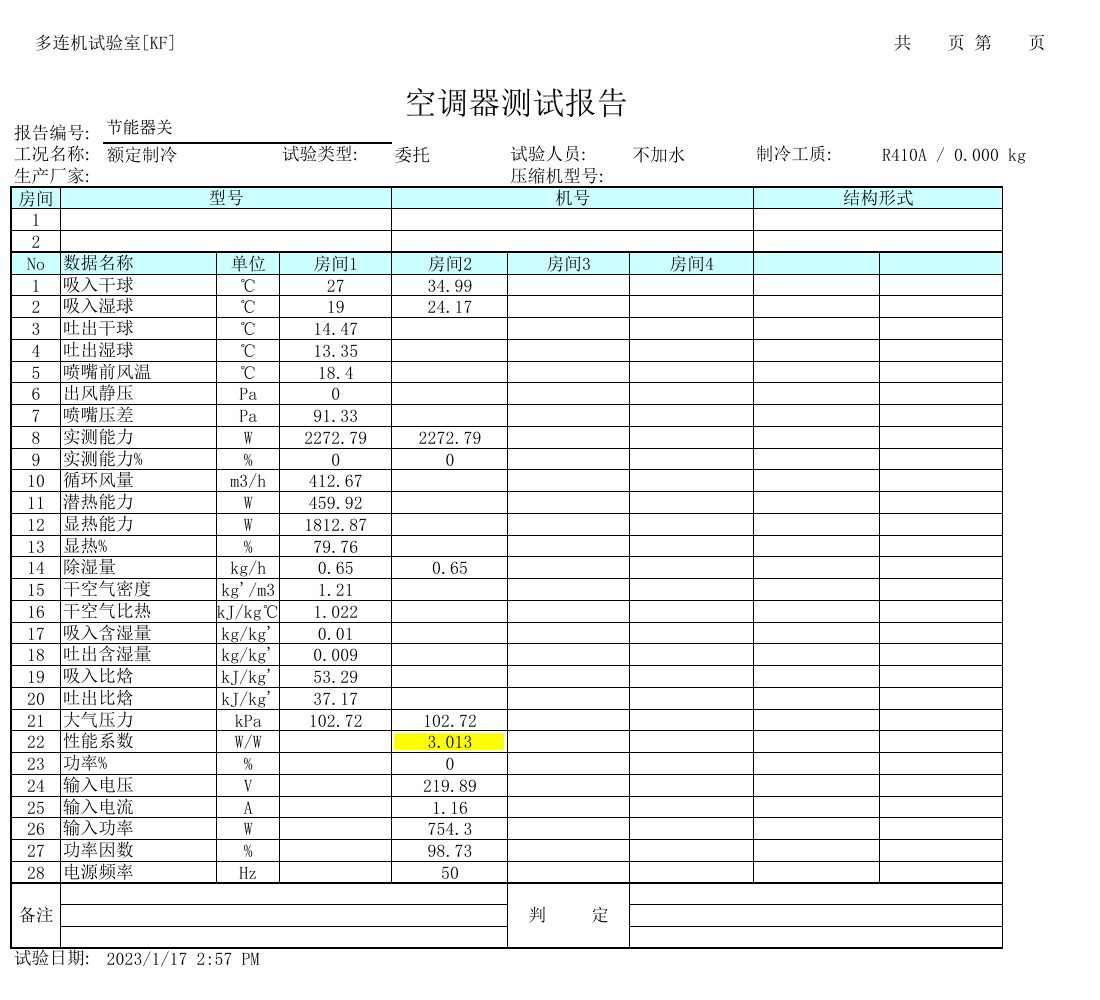
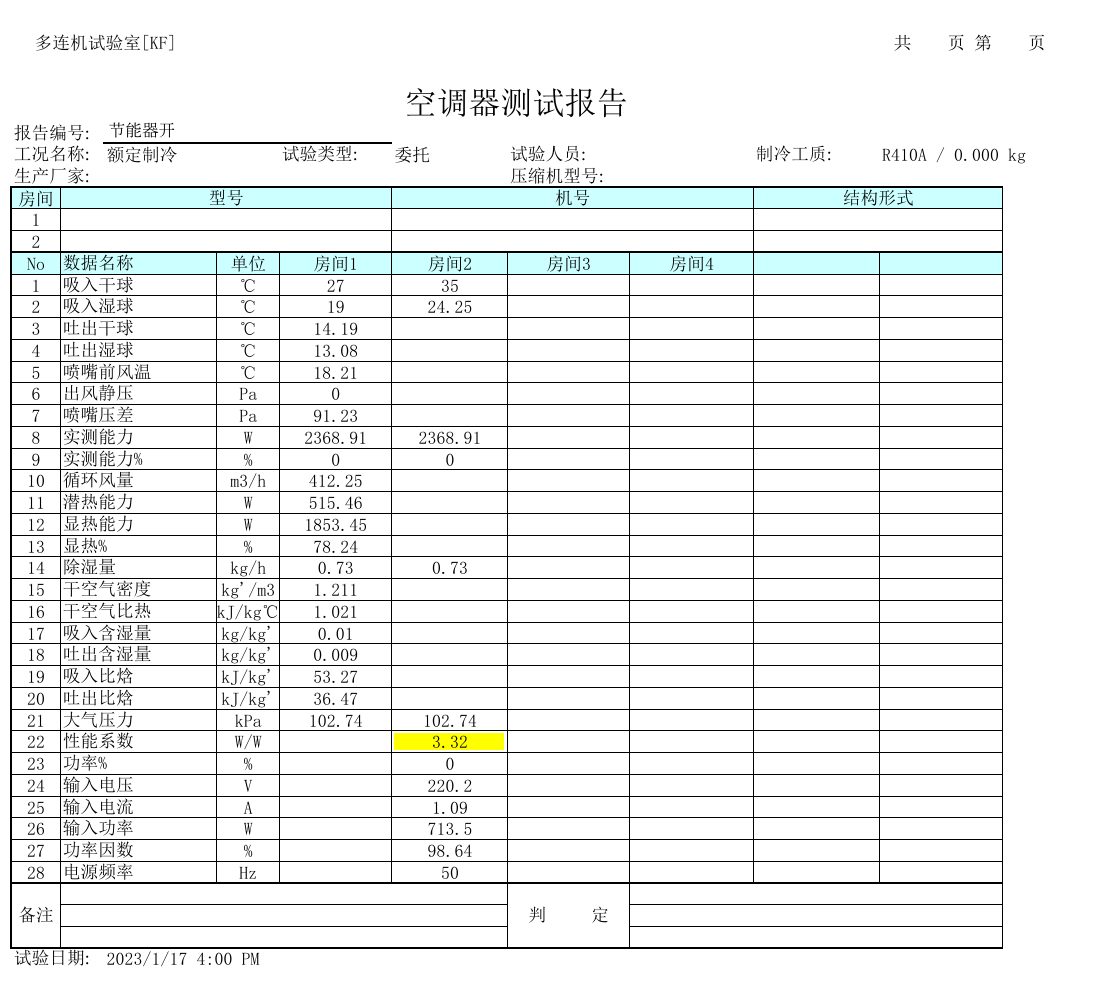
The number I can stand behind comes from a commissioned enthalpy-difference lab test at the Shanghai Institute of Quality Inspection and Technical Research (report W02314500060). A small R410A unit (about 2.3 kW of cooling) was run with the device off and on, at rated cooling with a 35 °C outdoor condition, on 17 January 2023. Coefficient of performance went from 3.01 to 3.32, about a 10% efficiency gain. Input power fell from 754 W to 714 W while measured cooling capacity rose from 2,273 W to 2,369 W.
That is one paired run on one unit in one condition, so I read it as a lab efficiency figure and not a guarantee for every installation. At equal cooling output, a 10% COP gain corresponds to roughly 9% less electricity. The report pages are below, device off and then on, with the COP highlighted.
From science fair to product
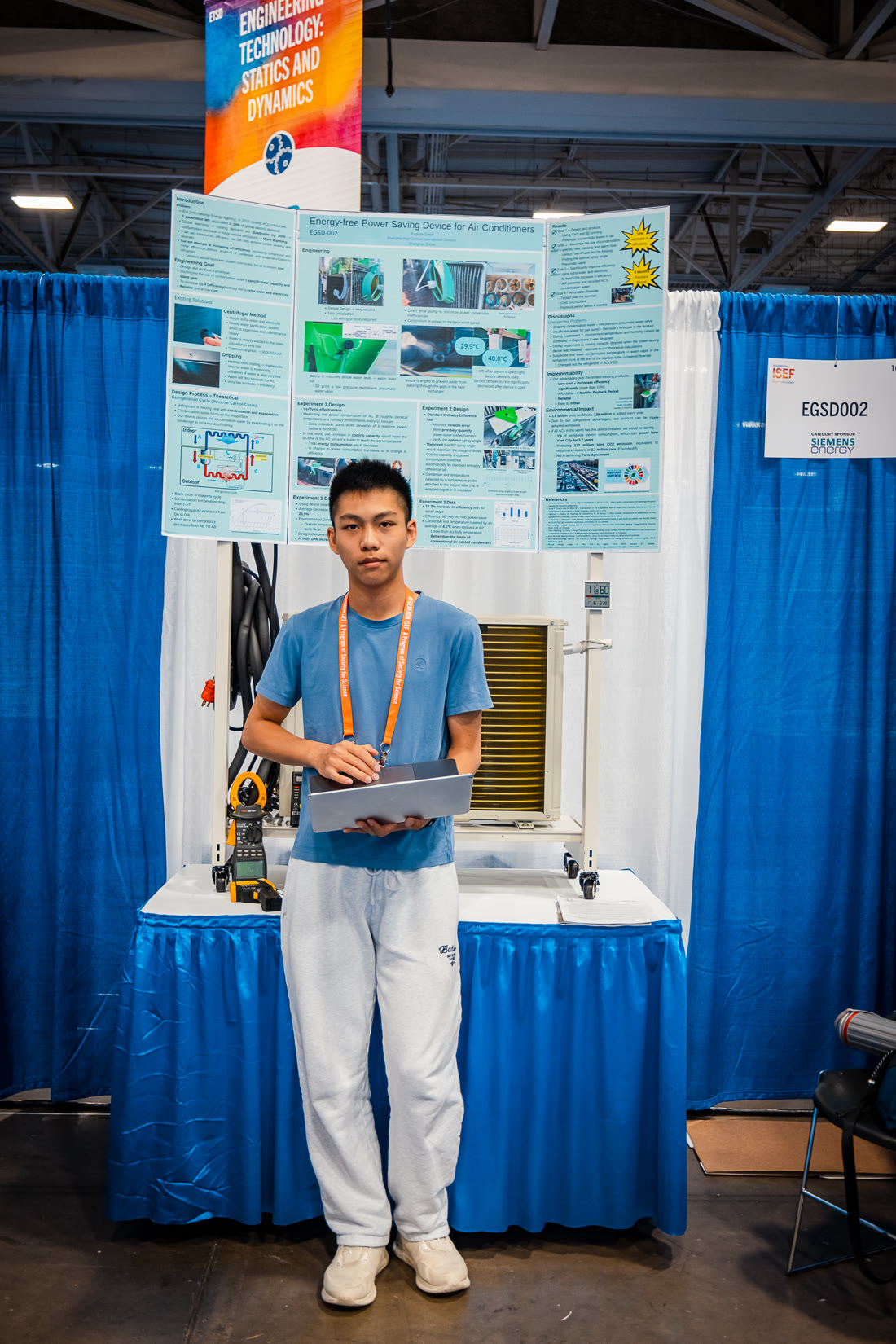
It began as my ISEF project, Energy-free power saving device for air conditioners, which took 1st place in the Energy: Sustainable Materials and Design category at the 74th Regeneron ISEF, and became the company's first product.
Product and company
Jinke Energy sells about 1,000 units a year, about US$35K of revenue, and is shipping the third revision. Across the three revisions, material cost per unit fell 34.6% and assembly time fell 70%, from the company's own accounting records. It is sold direct to households and to businesses, with installation done by the customer. I moved online sales from households to factories, now 60% of revenue, after finding that bulk orders cut the per-unit selling cost, and units are built on an assembly line at a factory in Suzhou.
Six Chinese utility-model patents protect the design, and all six certificates are linked below. The company has raised outside funding of about RMB 2 million (about US$280K) and joined Shanghai University's business incubator program.
For my work at a different company, Gienkee Plastics Machinery, see Heating Ring Design Automation.
Patents
Certificates as issued (PDF, in Chinese). The titles are my translations.
- CN 218820695 UElectric atomizing air-conditioner energy-saving device
- CN 217844118 UAuxiliary energy-saving device for use with an air-conditioner outdoor unit
- CN 220103390 UAuxiliary energy-saving device that lowers compressor energy consumption
- CN 221324607 UEnergy-saving device based on condensate return and atomized cooling
- CN 221780912 UAuxiliary energy-saving device based on condensate recovery and drip cooling
- CN 222651576 UEnergy-saving system built into and mounted on air-conditioner indoor and outdoor units
If this is the kind of work you need, let's talk.
Coffee chat