03 · Research tooling · Personal system
Second Brain
A personal notes-and-synthesis system built to hold a summer's worth of manager due-diligence and monthly strategy reports, and turn them into one comparable market-regime framework instead of 22 separate documents.
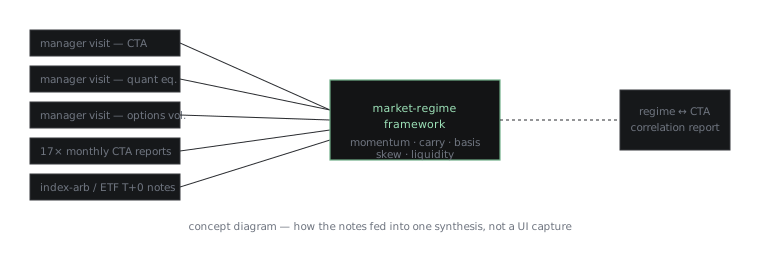
Over the internship I sat in on five hedge-fund manager visits — CTA, quantitative equity, index-arbitrage, options-volatility, and ETF T+0 strategies — each one assessed on exposures, Greeks, execution costs, capacity, attribution, and stress-testing practices. Alongside that, 17 monthly CTA reports came in on their own schedule, each describing a different slice of the same underlying funds. Read individually, none of it composes into anything; read side by side, the same handful of factors kept showing up under different names.
Why a system instead of a folder
A flat folder of PDFs and meeting notes makes it easy to reread any one document and hard to ask a question that spans all of them — "which of these five managers actually behaves like a CTA when carry turns negative?" isn't answerable by opening files one at a time. The second brain existed to hold each visit and each report as a linked note tagged against a common factor vocabulary, so a question like that could be answered by following links instead of rereading everything.
What came out of it
The notes converged on one market-regime framework comparing momentum, carry, basis, skew, and liquidity factors across environments — a shared lens the five manager visits and the CTA reports could all be read through — and fed a report on the correlation between individual CTA funds' returns and that regime framework, the actual deliverable the internship was for.
I don't have the notes themselves to show — they were internal work product from the internship — so this page describes the system rather than reproducing it.